All Quiet on the Western Front: Chapter Six Adaptation
- riverpetal9
- Mar 3
- 3 min read

Updated: Apr 20
Maryam Al-Rubaiee
Mr. Cohen
ENG3U
February 24 2026
SIX
The bombardment begins before dawn. We are awake already and no one truly sleeps anymore. The Earth trembled as if it had a fever. Plaster and dust sift down from the hollow roof and settle on our blankets like grey snow. Someone mutters a curse. Someone bitterly laughs too loudly. It dies out quickly.
I press my helmet lower and count the seconds between the whistle and the crash, it’s a habit now. Counting makes it seem almost reasonable. One, two, three — impact. The trench shudders. One, two — impact. It’s closer.
Kat crouched beside me, he’s chewing as if we’re at supper and not waiting to be buried. “They’ll lift soon,” he says. He always says something certain. It does not matter if it’s true what he’s saying. His voice is steadying me to the ground, and that is enough.
When the shelling stops, the silence is the worst. It stretches over our group, thinning the air. We know what follows.
“Stand to!” comes the order.
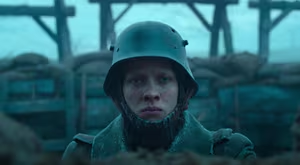
We climb the high ledge. The sky is the color of a dirty tin. Through the piled up smoke we see them — just shadows first, then the men. They look like us. Allies. They come forward, stumbling. My rifle is already against my shoulder. I do not remember raising it.
The recoil strikes my collarbone again and again.
Around me, the trench erupts into chaos. Shouting shots, the rattle of guns. The noise is so great that it becomes a kind of silence banging around inside my skull.
A boy — a man — near me, he fires wildly, his eyes are fixed and blown out. I want to tell this fellow to breathe, to aim lower, but my thoughts don’t follow my dry mouth. He jerks suddenly and folds over, without a sound. I immediately drag him back by his collar. His helmet rolls into the mud. His face is plastered with an expression of shock, almost offense.
The trench is a blur of bodies and splintered wood. Someone is screaming for a stretcher. Someone else calls for his mother. All these words hang strangely in the thick, smoggy air. Completely useless.
At last the whistle blows from behind us. The attack falters. We do not cheer, we’re too tired. I sit down in the mud, my hands are shaking now. They shake now that they have nothing to hold. Kat reassures me, he says it’s done. But nothing is done. Soon it will be quiet again. The wind will move over the torn fields as though they were merely ploughed.
Reflection
In my adaptation of Remarque’s influential novel All Quiet on the Western Front I wanted to capture the emotional and psychological toll of detachment and dissociation that defines Paul Baumer’s experience. Rather than glorifying battle, Remarque presents war as dehumanizing. I reflected this by beginning the scene not with action, but with atmosphere: “The Earth trembled as if it had a fever. Plaster and dust sift down from the hollow roof and settle on our blankets like grey snow”. By personifying the Earth as having “a fever”, I reflected the use of nature to show how even the environment seems damaged by the war. I used short, fragmented-type sentences such as “I press my helmet lower and count the seconds between the whistle and the crash, it’s a habit now. Counting makes it seem almost reasonable. One, two, three — impact.” I especially did this during the battle scenery, it emphasizes how soldiers rely on routine to survive. I show how action almost replaces thought in a way using the stream of consciousness of our narrator.


Comments